
The 2026 AI Search Playbook: 5 Strategies Every Local Business Needs Right Now
Search is no longer just about rankings. In 2026, Google’s AI-powered search experience has fundamentally changed how businesses get discovered — and if you’re still playing by the old SEO rulebook, you’re already behind.
Google’s AI Overviews, AI Mode, and conversational search features now sit above traditional results, pulling answers directly from trusted sources across the web. That means the businesses getting clicked, called, and visited are the ones that have positioned themselves as authoritative, structured, and consistent signals for the AI to cite.
At Justified Media, we work with businesses every day to navigate exactly this shift. This guide covers the five most critical strategies for staying visible in an AI-first search environment — with specific, actionable steps you can begin implementing immediately.

1. Optimize Your Local AI Citations
AI Overviews pull business mentions from across the web — Google Search, Google Maps, YouTube, Reddit, and dozens of niche platforms. Every inconsistency in your name, address, or phone number (NAP) is a signal that weakens the AI’s confidence in recommending you.
The fix is both simple and mission-critical: audit every directory, profile, and platform where your business appears and ensure your NAP data is identical everywhere. This isn’t just good housekeeping — it’s how you build the cross-platform trust that AI systems require before surfacing your business in high-intent searches.
Action steps: Run a citation audit, correct inconsistencies, claim any unclaimed listings, and prioritize platforms your customers actually use.
2. Treat Your Google Business Profile as an AI Asset
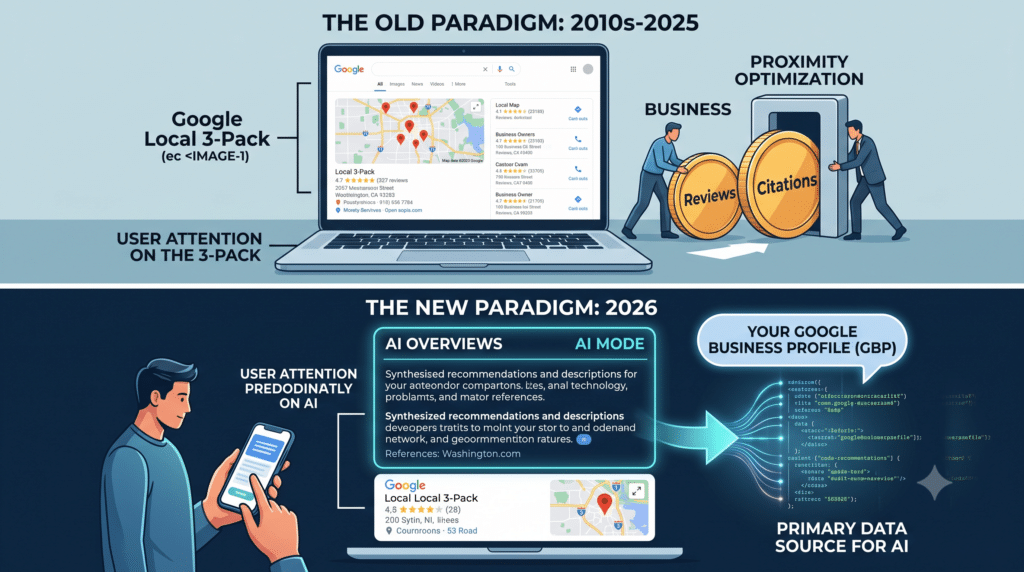
The traditional “Local 3-Pack” — those three business listings that appeared at the top of local search results — is increasingly being pushed below AI-generated summaries. This is a seismic shift for local businesses.
Your Google Business Profile (GBP) is now one of the primary data sources Google’s AI draws from when constructing local recommendations. A stale, incomplete, or unoptimized profile means the AI has less to work with — and may skip you entirely in favor of a competitor with a richer profile.
Action steps: Complete every section of your GBP, post weekly updates, respond to all reviews, add your full service list, and keep your hours accurate.
→ Read the full guide: Google Business Profile Is Now an AI Asset — Here’s How to Optimize It
3. Upload Your Inventory to Google Merchant Center
If you sell physical products, this is one of the highest-leverage moves you can make right now. Google’s AI search now displays real-time product data — including current stock and pricing — directly inside conversational search results.
Businesses that connect their inventory to Google Merchant Center are being surfaced in chat-based product queries that traditional SEO never reached. This is a direct pipeline between your stock room and a buyer who is actively ready to purchase.
Action steps: Set up a Google Merchant Center account, create a product feed, connect it to your Google Ads account, and keep your feed updated automatically.
→ Read the full guide: How Google Merchant Center Inventory Feeds Drive AI-Powered Product Discovery
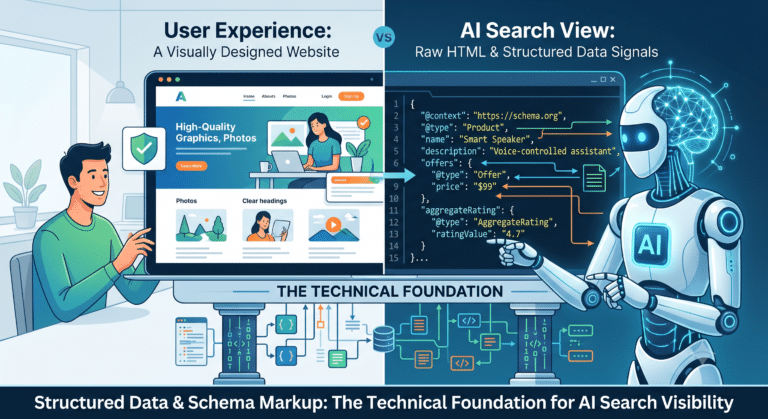
4. Implement Structured Data & Schema Markup
Google’s AI models need machine-readable signals to understand your website — not just your content, but what your business is, what services you offer, what your customers think of you, and how to contact you.
Schema markup is the technical language that provides those signals. Businesses with properly implemented schema are significantly more likely to be cited in AI Overviews, appear in rich results, and rank for structured queries. This is one of the most underleveraged advantages in local SEO today.
Action steps: Implement LocalBusiness schema, AggregateRating schema, Service schema, and FAQ schema across your key pages.

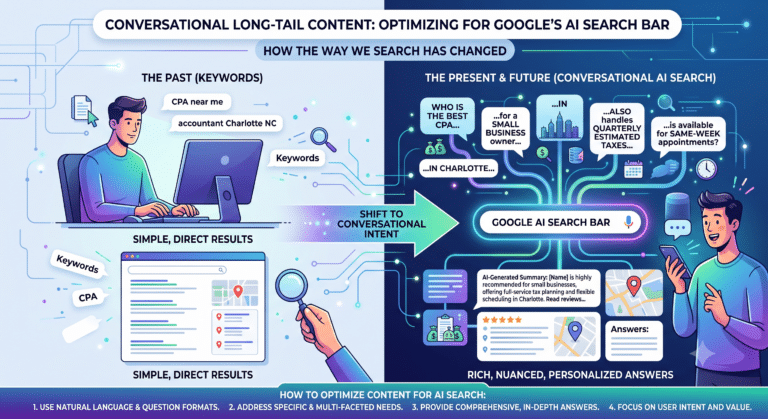
5. Create Conversational Long-Tail Content
Google’s AI search bar has made search radically more conversational. Users are no longer typing two-word queries — they’re asking full questions the same way they’d ask a knowledgeable friend. Your content needs to answer those questions directly, thoroughly, and authoritatively.
Businesses that invest in question-driven, long-tail content are becoming the sources that AI cites. This is the content layer that transforms your website from a brochure into a reference — and reference material is what AI Overviews are built from.
Action steps: Research the questions your customers actually ask, create FAQ pages, build Q&A-style blog posts, and structure content with clear headers that answer specific queries.
→ Read the full guide: Conversational Long-Tail Content: How to Write for Google’s AI Search Bar

The Bottom Line
AI search is not a future concern — it’s the current reality reshaping how local businesses compete. The five strategies outlined here are not optional enhancements; they are the foundational requirements for visibility in 2026 and beyond.
The businesses that act now — that clean up their citations, optimize their profiles, structure their data, and create genuinely useful content — will own the AI-generated recommendations that are rapidly becoming the first and only click for high-intent buyers.
How Justified Media Can Help
Ready to dominate AI search? Justified Media can help you build the strategy, implement the technical foundations, and create the content that gets your business cited, ranked, and chosen. Get in Touch with us Today!