
Google Ads for Water Damage Restoration: How to Get High-Intent Leads Fast
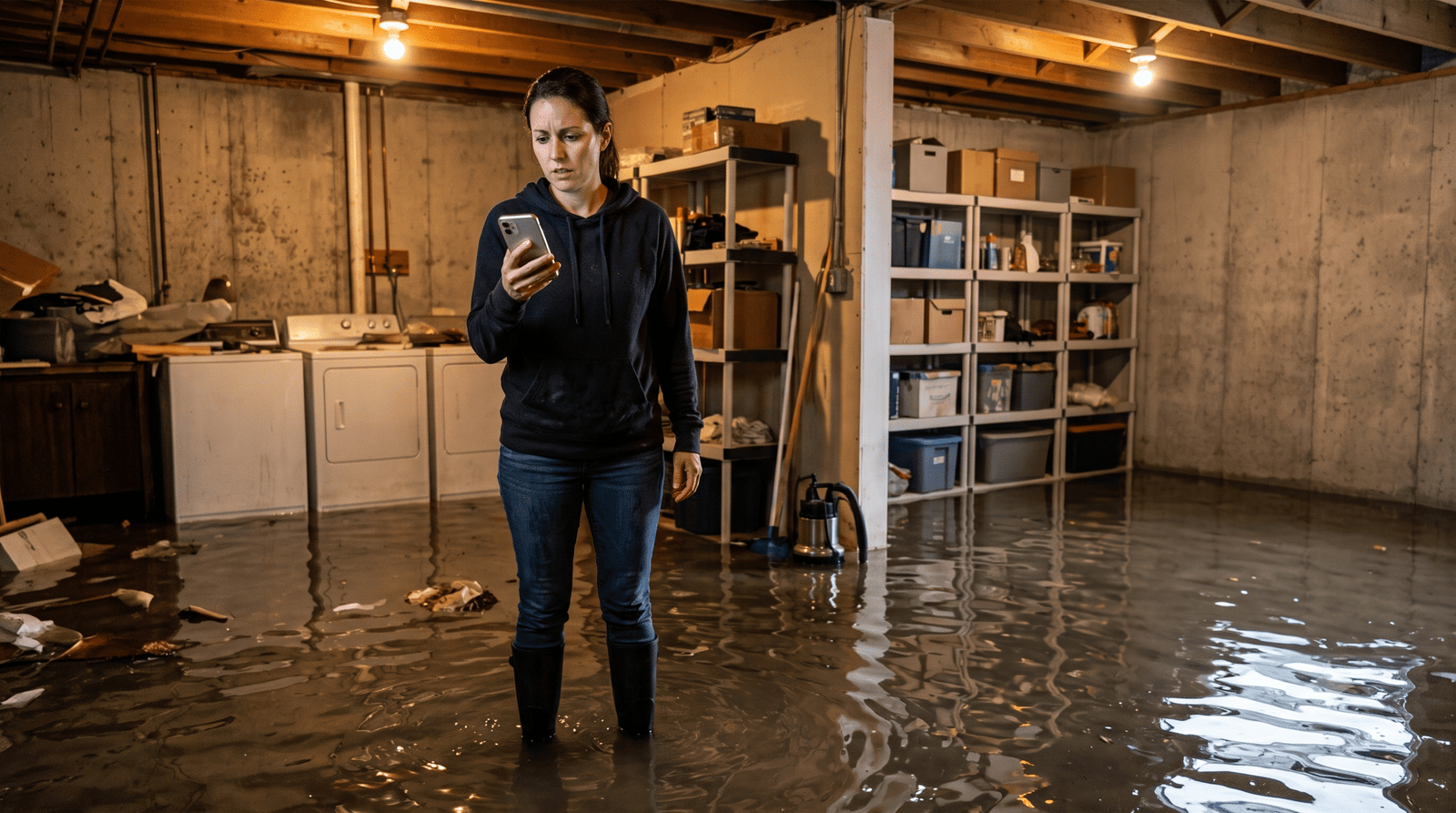
In the restoration industry, timing is everything. A homeowner with three inches of water in their basement isn’t going to wait for an organic search result to show up — they’re going to call the first credible company that appears at the top of Google. That’s the exact moment Google Pay-Per-Click advertising was built to capture.
PPC (Pay-Per-Click) advertising allows your restoration company to appear at the very top of Google search results immediately — above organic listings, above local map pack results — and pay only when someone clicks your ad. For emergency services like water damage restoration, the customer intent is about as high as it gets. Someone searching ’emergency water damage restoration’ isn’t browsing. They need help now.
When managed properly, Google Ads for restoration companies can deliver a 5x to 10x return on ad spend. When mismanaged, it’s one of the fastest ways to burn through a marketing budget with nothing to show for it. This guide explains how to build and run Google Ads campaigns that actually generate profitable jobs — not just clicks.
Understanding the Restoration PPC Landscape
Before diving into campaign setup, you need to understand the market you’re competing in. Water damage restoration is one of the most competitive and expensive categories in local Google Ads. In major metro areas, cost-per-click (CPC) for top keywords can range from $25 to $80+ per click. That means a single ad that generates 10 clicks costs $250–$800 without a single phone call.
This isn’t a reason to avoid PPC — it’s a reason to run it correctly. Understanding the economics of your campaigns is what separates profitable restoration advertisers from ones who abandon Google Ads after burning through their budget.
The Economics of Restoration PPC
- Average CPC for restoration keywords: $20–$80 depending on market and keyword
- Average click-to-call rate for well-optimized landing pages: 8–15%
- Average close rate for inbound emergency leads: 40–70%
- Average water damage job revenue: $3,000–$15,000+
Working backward: if you spend $1,000 on PPC and get 25 clicks at $40/click, with a 10% call rate that’s 2.5 calls. At a 50% close rate, you’ve generated approximately 1.25 jobs. If your average job revenue is $5,000, that’s a 6x return on ad spend. The key variables are your cost-per-click, your landing page conversion rate, and your close rate — optimize all three.
The math works. But it only works if your campaigns are built correctly, your landing pages are optimized, and your team is answering calls promptly. A missed call on an emergency restoration lead is a $5,000+ job walking out the door.

Step 1: Keyword Strategy for Restoration PPC
The biggest mistake restoration companies make in Google Ads is targeting the wrong keywords. Keywords like ‘water damage’ or ‘restoration company’ are too broad — they attract searchers at every stage of intent, from someone doing research to someone in an active emergency. You’re paying top dollar for clicks that may never convert.
High-Intent Emergency Keywords (Top Priority)
These are the keywords you want most. They signal immediate need and the highest likelihood of calling:
- Water damage restoration [city name]
- Emergency water damage restoration [city name]
- Flooded basement cleanup [city name]
- Water extraction service [city name]
- Emergency water removal near me
- Water damage repair company [city name]
- 24 hour water damage restoration
- Burst pipe water damage [city name]
Secondary Intent Keywords (Medium Priority)
These searchers have a problem but may be earlier in their decision process:
- How to dry out flooded basement
- Water damage restoration cost
- Water damage restoration company near me
- Best water damage company [city name]
Negative Keywords (Critical — Do Not Skip)
Negative keywords prevent your ads from showing on irrelevant searches. Without aggressive negative keyword lists, you’ll pay for clicks from DIY searchers, students, job seekers, and competitors. Build your negative keyword list before launching:
- DIY, do it yourself, how to, tutorial, video
- Job, career, employment, hiring
- Free, cheap, low cost (unless you want price-sensitive leads)
- Competitor brand names (unless running competitor campaigns intentionally)
- Water damage mold (separate campaign if desired)
- Insurance claim (complex — discuss with your agency)

Step 2: Campaign Structure That Maximizes ROI
How you structure your Google Ads campaigns determines how well you can control spending, test performance, and optimize over time. For restoration companies, we recommend a structure based on service type and location.
Recommended Campaign Structure
- Campaign 1: Emergency Water Damage — [Primary City]
- Campaign 2: Emergency Water Damage — [Secondary City 1]
- Campaign 3: Emergency Water Damage — [Secondary City 2]
- Campaign 4: Water Damage General — All Locations
- Campaign 5: Competitor Keywords (optional, advanced)
Keep each city in a separate campaign so you can control budgets individually. A city generating $8,000 jobs should get more budget than a city generating $2,500 jobs. City-level campaign structure gives you that control.
Ad Groups Within Each Campaign
Within each campaign, segment your ad groups by keyword theme:
- Emergency keywords (highest bid, most urgent)
- Water extraction / removal keywords
- Flood cleanup keywords
- Brand keywords (your company name — protect your brand)
Step 3: Writing Ad Copy That Drives Emergency Calls
In a water damage emergency, customers are stressed, moving fast, and scanning results quickly. Your ad copy needs to communicate three things immediately: you’re available now, you’re local, and you’re trustworthy.
Responsive Search Ad Best Practices
Google’s Responsive Search Ads (RSAs) allow you to write up to 15 headlines and 4 descriptions, which Google tests in different combinations to find the best performers. Write headlines that address each of these angles:
- Urgency: ’24/7 Emergency Water Damage’ | ‘Available Now — Call Anytime’ | ‘We Answer Day & Night’
- Location: ‘Water Damage Restoration in [City]’ | ‘Serving [City] & Surrounding Areas’
- Trust: ‘IICRC Certified Technicians’ | ‘Licensed & Insured’ | ‘Google Guaranteed’
- Speed: ’60-Min Response Time’ | ‘On-Site in Under an Hour’
- Results: ‘Free Estimates’ | ‘Insurance Claims Handled’ | ‘No Hidden Fees’
Ad Extensions (Use All of Them)
Ad extensions increase your ad’s real estate on the search results page and add critical information:
- Call extension: Your primary phone number (enables click-to-call)
- Location extension: Your business address (reinforces local presence)
- Sitelink extensions: Links to ‘Water Damage,’ ‘Mold Remediation,’ ‘Emergency Service,’ ‘About Us’
- Callout extensions: ‘Available 24/7’ | ‘IICRC Certified’ | ‘Works with All Insurance’
- Structured snippet extensions: ‘Services: Water Extraction, Drying, Dehumidification, Mold Prevention’
Step 4: Landing Pages That Convert Clicks into Calls
Your ad gets the click. Your landing page gets the call. Most restoration companies make the critical mistake of sending all their PPC traffic to their homepage — and they wonder why their conversion rates are low. A homepage is designed for browsers. A landing page is designed for buyers.
What a High-Converting Restoration Landing Page Needs
- Headline that matches the ad: If your ad says ‘Emergency Water Damage Restoration in Phoenix,’ the landing page headline should say ‘Emergency Water Damage Restoration in Phoenix’ — not your company name
- Phone number above the fold: Make it impossible to miss. Use a large click-to-call button on mobile.
- Fast loading: Landing pages need to load in under 3 seconds. Every second of delay reduces conversions by 7%.
- Clear value proposition in 5 seconds: The visitor should immediately understand what you do, where you serve, and why to call you
- Social proof: Display review count, star rating, and 2–3 specific testimonials
- Trust signals: IICRC certification badge, BBB accreditation, years in business, insurance logos
- Simple contact form: Name, phone number, and message — nothing more
- Single call to action: Don’t confuse visitors with multiple CTAs. One goal: get the call.
Build Separate Landing Pages Per Campaign
Your Phoenix emergency campaign should go to a Phoenix-specific landing page. Your Scottsdale campaign should go to a Scottsdale page. Matching the ad’s location to the landing page’s content dramatically increases Quality Score and conversion rates — which lowers your cost per lead.
Step 5: Bidding Strategy and Budget Management
How you bid determines where your ads show and how much you pay. For restoration companies, we generally recommend starting with a manual CPC or Target CPA (Cost Per Acquisition) strategy depending on the data you have available.
Bidding Recommendations by Stage
- Launching (first 30–60 days): Use Maximize Clicks with a manual CPC cap to gather data while controlling spend
- After 30 conversions: Switch to Target CPA and set your target based on your job economics
- Mature campaign (90+ days): Test Target ROAS (Return on Ad Spend) if you’re tracking revenue in the platform
Dayparting: When to Run Your Ads
Water damage emergencies happen 24 hours a day, 7 days a week — but your capacity to answer calls may not. Analyze your call data and determine your peak response hours. Run ads most aggressively during hours when you can respond fastest. If you have 24/7 on-call coverage, run ads around the clock.
Budget reality check: To run a competitive Google Ads campaign in most metro areas, restoration companies need a minimum monthly budget of $2,500–$5,000. Markets like Los Angeles, New York, and Chicago may require $8,000–$15,000+ per month for meaningful volume. Budget less and you’ll generate some leads but won’t have enough data to optimize effectively.

Step 6: Tracking, Attribution, and Optimization
A Google Ads campaign you can’t measure is a campaign you can’t improve. Proper conversion tracking is non-negotiable.
What to Track
- Phone calls from ads (via Google’s call tracking or a third-party tool like CallRail)
- Phone calls from your website (all traffic sources, not just PPC)
- Contact form submissions
- Landing page engagement metrics (time on page, scroll depth, bounce rate)
Weekly Optimization Tasks
- Review search term reports and add new negative keywords
- Pause underperforming ad variations and test new headlines
- Adjust bids by device (mobile typically deserves higher bids for emergency restoration)
- Check Quality Scores — low scores mean higher CPCs. Improve ad relevance and landing page quality.
- Review competitor ads via Auction Insights and adjust strategy accordingly
The biggest optimization lever most restoration companies miss: call tracking. If you don’t know which keywords and ads are generating actual calls (not just clicks), you’re flying blind. Set up call tracking before you spend a single dollar on PPC.
Common PPC Mistakes Restoration Companies Make
- Sending traffic to the homepage instead of dedicated landing pages
- No negative keyword list (or one that hasn’t been updated in months)
- Running ads without call tracking — can’t know what’s working
- Too-small budgets that generate insufficient data for optimization
- Not running ads on weekends or after hours — when many emergencies occur
- Using broad match keywords without proper management (leads to massive wasted spend)
- Not checking search term reports (you’d be shocked what triggers your ads)
- Ignoring Quality Score — low QS means you pay more for the same position
How Justified Media Manages Google Ads for Restoration Companies
Running profitable Google Ads for restoration companies requires deep industry knowledge combined with platform expertise. At Justified Media, we’ve built and managed PPC campaigns specifically for restoration companies — and our founder’s background in the industry means we understand the economics, the customer psychology, and the competitive dynamics better than a general digital marketing agency ever could.
We handle every aspect of your Google Ads management: keyword research, campaign build, landing page development, conversion tracking setup, bid management, and ongoing optimization. We provide transparent monthly reporting so you always know exactly what your campaigns are producing.
If your current PPC campaigns aren’t generating consistent, profitable leads — or if you’ve never run Google Ads before and want to launch correctly from day one — we’d love to talk.
Justified Media specializes in restoration company marketing. No guesswork. Just proven PPC strategies built for the restoration industry.